Signet is now SIGILANCE, and it's available today!
NOTE: The Sigilance domain name depicted in this post expired several years ago, and now points to a different project. I am not affiliated with that project. The images remain as originally published in 2015, but links have been removed.
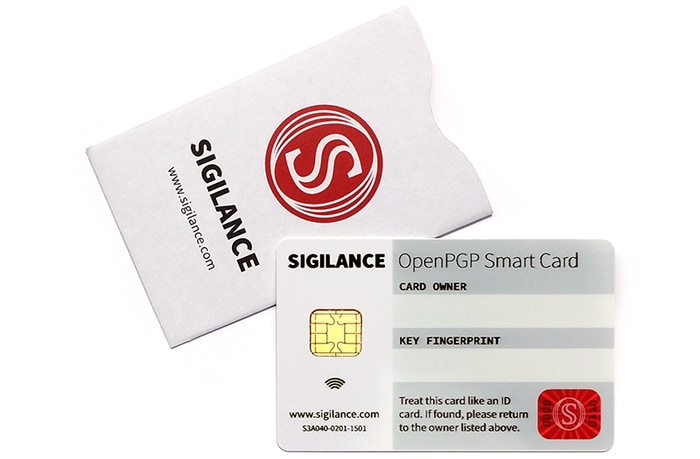
Twelve weeks out now from the close of the Signet project, a lot has happened. The big news is this: after the project didn’t make, we made the product anyway! It’s better than before. It’s got a new look and a new name. And if you want one, you can buy one today. $25, with no card reader required for use with NFC-enabled Android smartphones and tablets.
Better than Before
In my project video, I mentioned that Android support wasn’t 100% there yet. Well guess what: it is now! Over the last two months, I’ve worked with the team behind OpenKeychain, the Android OpenPGP app, to add support for smart card key export. Today, version 3.3 was released with that added functionality. If you want less jargon: it just works on Android, with no need for a card reader or complicated command line stuff.
Or, if you want more jargon: It’s a mobile-first approach to OpenPGP, that lets you use smart card encryption without ever having to interact with the GnuPG command line interface.
The fact that it “just works” without a card reader means we’ve been able to cut the price: instead of $50 for a kit with multiple parts, you can just spend $25 on the smart card. That price includes free shipping, as well as an RFID-blocking sleeve, which is something that several of you asked for in project feedback.
New Name, New Look
The original name of this project, “Signet,” came from the signet rings that were traditionally used to seal documents. In rethinking the look and feel of the product, there was also a rethinking of the name.
SIGILANCE calls to mind the same Latin root sigillum, or seal. But it also calls to mind the Hebrew segula, which refers to a talisman, or another small object with a hidden power. The chip at the heart of the SIGILANCE OpenPGP smart card holds onto your secret keys, deciphering and authenticating your communications. The new name also calls to mind the word vigilance, which is something that we all need more of in order to protect our privacy in a world where new threats seem to emerge every day.
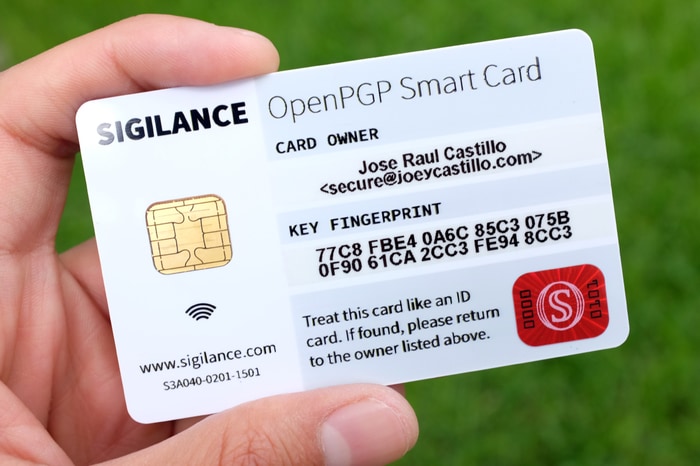
The new design of the card also incorporates the two most important bits of information for most people who use OpenPGP’s Web of Trust: your identifying information, and the key fingerprint tied to your identity. If you’ve ever signed someone’s key or asked someone to sign your key, these are the two essential bits of data required for that task. The card includes space for these things, and you can either write on the card with a permanent marker, or (as I’ve done on my card above) print out a label and stick it on. With the new design, I like to think of it as my Internet ID card.
Going Forward
Seeing this project through to its completion felt like a duty for me. The means shifted somewhat, but the goal has always been the same: let’s get more people using strong encryption to protect their communications.
If you have other colleagues or friends — journalists who need to protect their sources, or activists who need to protect the sensitive information of themselves and the communities they serve — please turn them on to SIGILANCE and to the OpenPGP ecosystem. This isn’t something we just invented; the OpenPGP ecosystem has been around for decades, and represents a robust community of people who use good cryptography, and want to make it easier for more people to partake.