The “Why” Matters (or: Why Build a Watch?)
Originally published on Patreon.
For the last few months I’ve been writing a list of lessons learned from this time building Oddly Specific Objects. Big picture stuff, mostly, with concrete applications for what we do day to day. “Less is More”; “Know the Numbers”. Things like that. But the first one on the list is definitely this: “The ‘Why’ Matters”.
The world is filled with things one could do. In deciding to actually do one, you should have a reason why. It could be a big ideological reason — the world needs an open hardware e-book reader — or it could be a small and personal one. In the case of Sensor Watch, it was the latter. I knew that making the Open Book would mean entering the realm of PCB assembly. Manufacturing, really. And I also knew that the Open Book was too complex and expensive to be the first gadget I had manufactured.
Why Sensor Watch? Because I wanted to cut my teeth on manufacturing with a simpler, cheaper gadget before taking the plunge with Open Book. I did it as a learning experience.
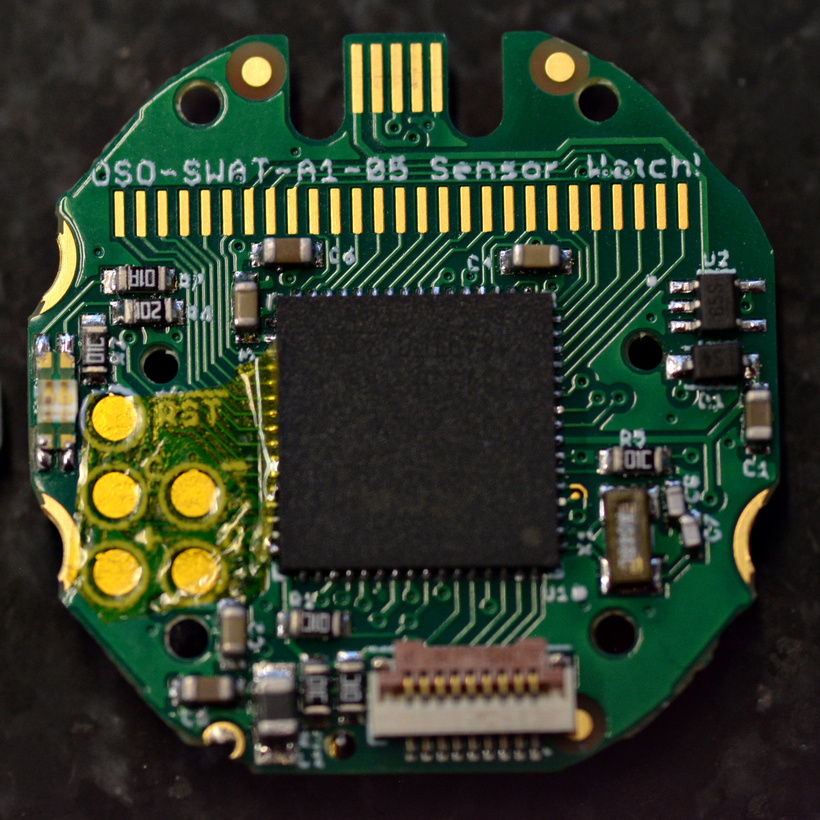
If you look at the Sensor Watch circuit board, there really aren’t a lot of parts there. From the left, you have an LED and a trio of resistors. In the center, a microcontroller and some capacitors. On the right, a power supply circuit. Moving down, you see the crystal and a couple of capacitors. Then finally that nine-pin connector and a cluster of passives. The part count is below two dozen, most of them costing just pennies a piece. I did the math and figured I could make 100 of these for a little over a thousand dollars — a good first foray into the world of manufacturing.
I worked with Cyber City Circuits for that first manufacturing run in November of 2021, and the lessons learned from that were worth every penny. I ended up with 110 assembled boards, and in the process I learned things about this design that I didn’t yet know. That’s an interesting revelation. I designed Sensor Watch in January of 2021; by March I had the design finalized; by November I had working firmware. What more did I have to learn about this thing I’d been making all year?
The answer is that while I knew a lot about the thing I was making, I didn’t know much about making my thing. For example: I’d been assembling these boards by hand, with tweezers and reading glasses on a table in the workshop:
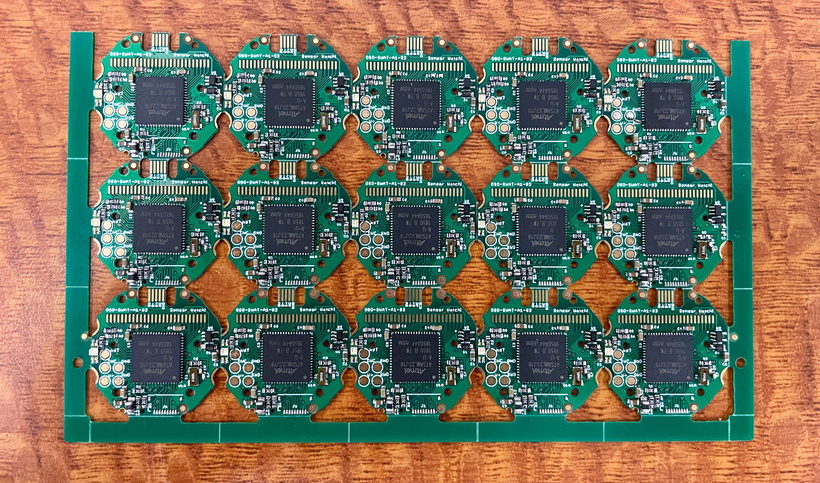
But manufacturing the thing meant handing the job over to a pick and place robot, and we had to make changes to make it easier for the robot to build them.
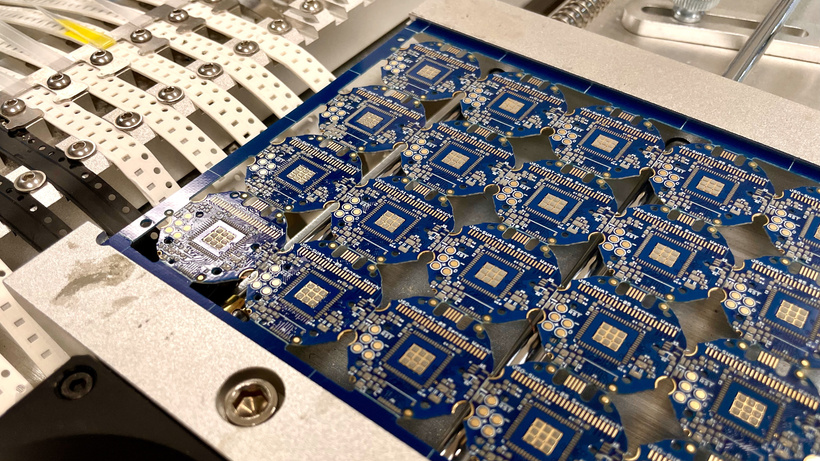
We realized when we set the robot on that first panel that we’d need to make some changes. We broke the panels in half when we discovered the thin PCB could flex when parts got placed. After seeing some very specific failures — parts shifting when reflowed — the pick and place operator had to make some slight nudges to a couple of tiny parts. We also discovered a recurring solder bridge in one spot, causing a short circuit. Adding extra support to that corner of the panel fixed the issue completely.
In learning these lessons on the first 100, we got better yield on the next 400, and on the 1,000 after that.
I can go into all the details in a later lesson — “There’s More To It Than That” — but the point of this post is that there was a concrete “why” behind Sensor Watch. The project existed to teach me about manufacturing, and the lessons I learned from it are going to serve me well as I move on to manufacturing more and more complex objects. My PCBA partner even told me that building Sensor Watch helped them fine-tune their manufacturing processes.
In short: the “why” worked.