Anything Can Be Made
Originally published on Patreon.
This is just a quick post detailing some emails from last week that came to fruition over the weekend (aka Monday Shenzhen time).
The problem space: Sensor Watch is cool, but the LCD is very limited. The main line can display six digits, but a couple of them have limitations. Then there’s the two digits for the date, but one’s missing a segment, so it can’t display anything but 1, 2 and 3. Finally we have those two alphanumeric characters at the top… but they each have a different wacky layout, and one’s surprisingly limited.
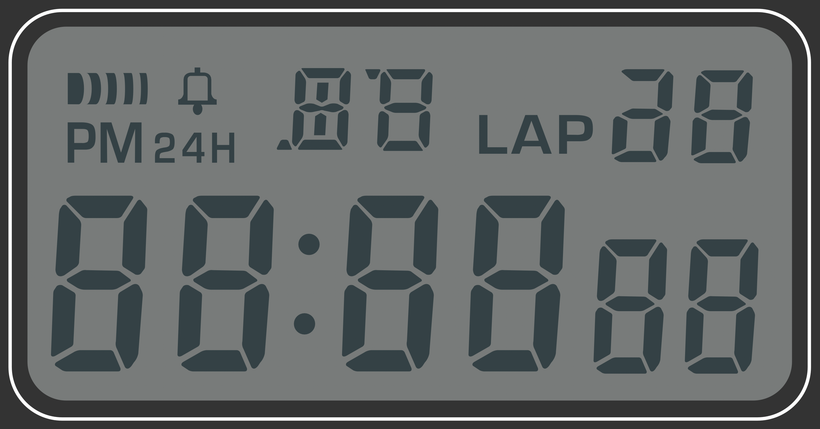
I’ve long wanted to design a completely different LCD for the watch that would address some of these challenges:
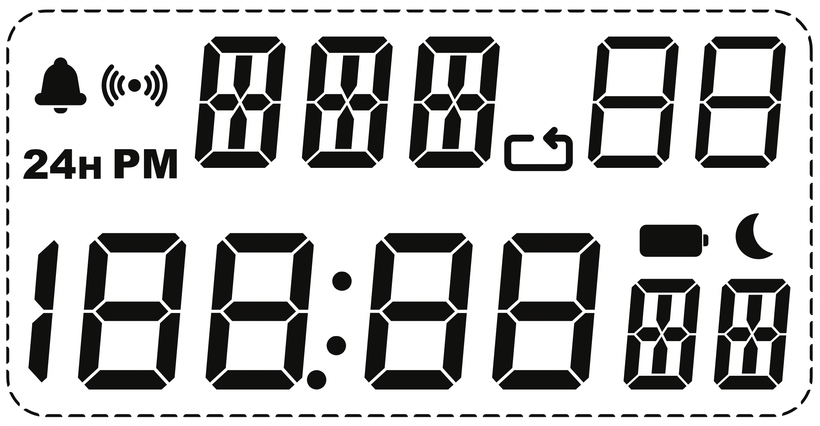
But that opens up a challenge of its own: for this to work, the LCD would have to fit precisely into the original F-91W enclosure, and it’s a tight squeeze. Here’s a photo comparing the thickness of the F-91W LCD to an off-the-shelf LCD of similar design:
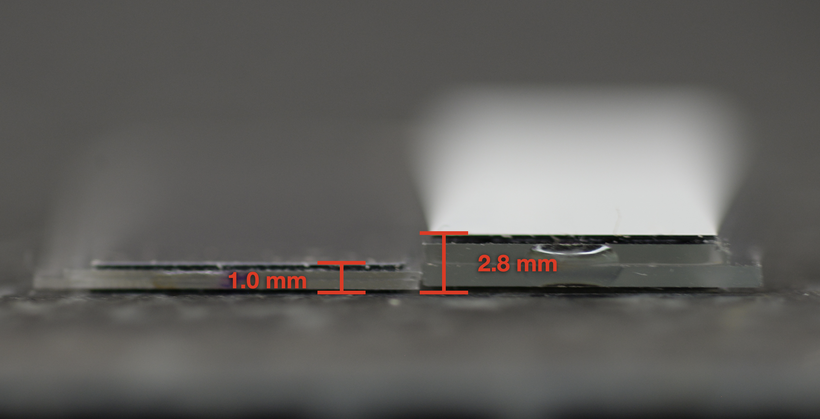
IT IS SO THIN! A millimeter thin with two layers of glass and a polarizer. With the little white diffuser that they add behind it, the overall thickness is 1.4 millimeters, but in my testing that’s the absolute most you can fit into the area back there.
Side story: A little over a year ago, before I’d had a custom LCD of any kind fabricated, I reached out to a U.S. based LCD manufacturer and described what I was looking to have made. Over the course of a few emails, I got shut down in perhaps the most brutal way possible. Direct quote: “To be completely honest, I think your design is likely setting you up for failure on many fronts. I think we will pass on this at this time.”
In a way, he was probably right. I didn’t know enough to know what I was asking for. The fact is, LCDs are an old school technology and they’re staggeringly cheap to have made at quantity — but only if you keep it simple. It sounds like a dumbass tautology to say that simple things are easy and hard things are hard. But there it is, the hard-hitting insight you pay $3 a month for.
Anyway. After that brutal shutdown, I regrouped and had the display glass for the LCD FeatherWing fabricated, using a very simple process that yielded a 2.8 millimeter thick display, just like the one above. Successful product! Or at least it will be once we sell more of them. But in the process I learned a lot, and made relationships with a couple of LCD fabricators. So when one of them reached out earlier this month asking if I had any other projects, I asked them about this pipe dream of a 1.4 mm thick display.
Because here’s the thing: clearly a display like this can be made. I know this because Casio made the thing! They ship several million of them a year! It’s not like I’m trying to order a cure for cancer with a side of cold fusion. I know what I want is possible. I just need to figure out how.
Anyway: my fabricator responded quickly and said that yes, they do work with thinner glass! They have 0.7mm glass that yields a 2mm thick display when all the layers are in, 0.55mm glass that would give me something 1.7mm thick, and 0.4mm glass that would yield — BINGO! — the long-sought 1.4mm thin display.
Then I sent over my design and they said it wouldn’t work with the thinnest process. LOL.
Could I work with 1.7 mm, they asked?
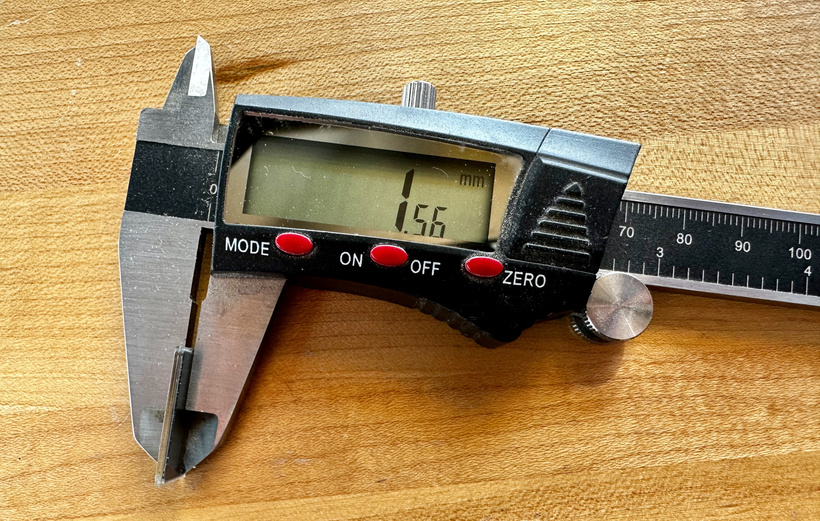
Turns out I can answer that question pretty easily: I have a ~1.6 mm display glass on hand here. It came out of a cheap knockoff Casio that clearly cut some corners. And while it has the same outline as the original display, I’ve tried to fit it into the original enclosure. It doesn’t work.
So I asked: What is it about my design that makes it unsuitable for 0.4 mm glass? Is it the segment size, the voltage, the intended duty cycle? What can I change to make this possible?
My fabricator responded: “We can make 0.4mm glass for you, but the price would be much higher since the glass is so thin, and the defect rate will be very high.”
So there you have it. As it turns out, it can be made. They’ll have a lower yield, and throwing out the displays that don’t work will raise the cost of the ones that do. But it can be made! And depending on the price — I don’t have an answer for that one yet — I might just make it.